
Technical context
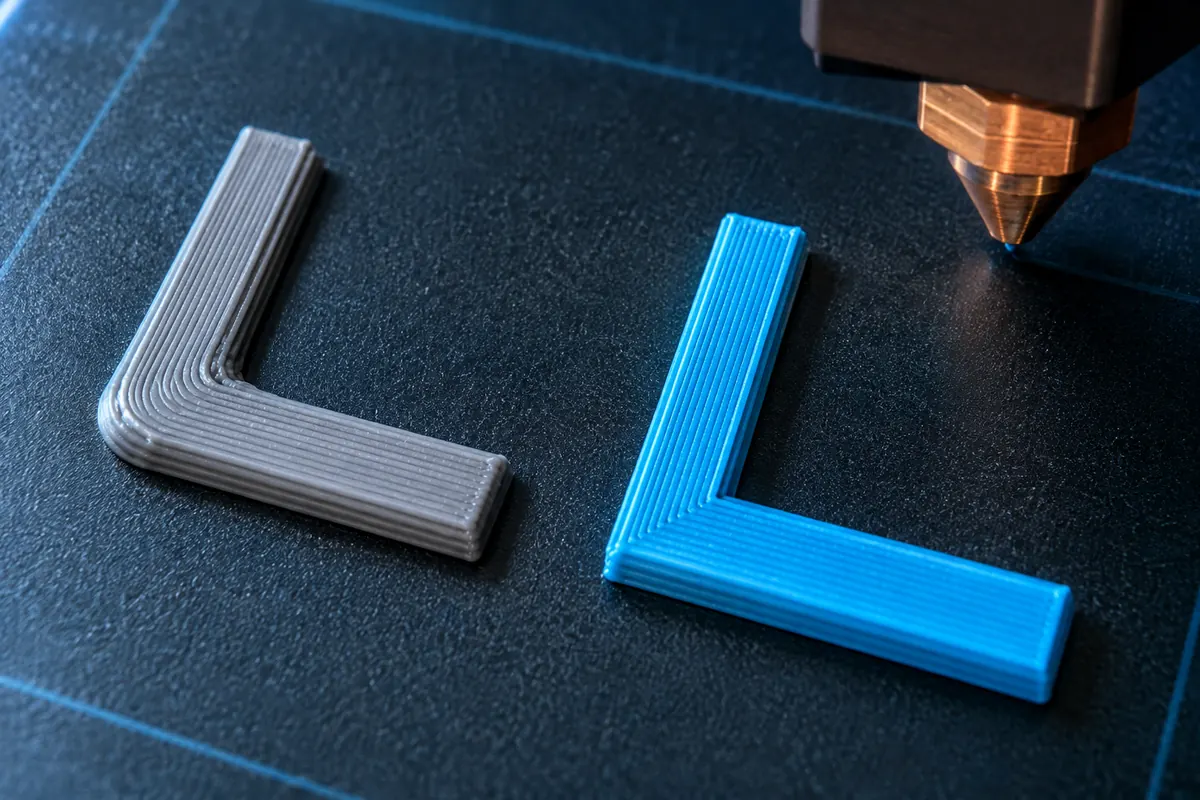
Follow the firmware's exact test procedure and tower parameters. Select the physical region with acceptable corners, then map its measured height to the coefficient. Coefficients depend on extruder, nozzle, temperature and material; do not copy a number from an unrelated printer.
Practical workflow
Recheck the candidate at normal printing acceleration. Excessive advance can ask for abrupt extruder motion and cause skipped feed. Pressure compensation may reduce oozing symptoms but does not make moisture, contamination or inappropriate retraction irrelevant.
Calculation and units
Coefficient = start + height × factor. Factor must match the tower's per-height procedure. Klipper and Marlin coefficients are not interchangeable.
Worked example
Start 0, factor 0.005/mm and best height 12 mm give 0.060. Use the specified height origin without arbitrary base subtraction.
Validate the outcome
Tune feed and temperature first; validate at normal acceleration. Store values per nozzle and material.
Read the tower's parameter contract
A tower can vary coefficient by height, layer or band. Start + height × factor applies only to the generator's height-based linear form. A 0.005 increment per five-layer band is not 0.005 per millimeter. Record coefficient start, height origin and increment units, then measure from the exact specified reference. A base can be included or excluded by the generator; never subtract a guessed base merely because lower layers look different.
Validate at production acceleration
Test the candidate on a representative real part at normal acceleration and cornering conditions. A constrained tower can conceal transient extruder demand that becomes excessive in production. Inspect skipped feed and distorted starts rather than accepting the arithmetic alone. Keep temperature and material flow stable. Pressure advance changes transient behavior, while total nominal material and path timing are separate quantities; it is not a way to generate free throughput.
Store a traceable material-specific result
Record nozzle, extruder, filament grade, temperature, tower settings and selected region. Retest after substantial changes. If strings persist despite acceptable corners, investigate moisture, nozzle deposits and retraction instead of escalating advance indefinitely. Firmware procedures and coefficient definitions differ, so copying a Klipper value into Marlin or another system is not a valid calibration. Preserve the original setting for controlled comparison and restart according to the documented workflow.
Linear tower mapping atstart0 factor0.005/mm
| Measured height | Candidate coefficient |
|---|---|
| 8 mm | 0.040 |
| 12 mm | 0.060 |
| 16 mm | 0.080 |
Separate corner artifacts from total-flow faults
Pressure advance is most relevant to transient extrusion around accelerations and decelerations. Inspect where the defect appears. Overfilled corners with otherwise consistent long walls are different from missing material across every path. The latter may need flow or feed diagnosis instead of a higher advance value. Keep temperature, feed calibration and material ratio fixed while comparing tower regions.
After mapping the chosen height, inspect a representative normal-speed part and record whether corners, starts and extruder motion remain acceptable. If high advance causes skips at production acceleration, the visually chosen tower number is not an accepted profile yet. Reduce or retest according to the firmware procedure. For persistent strings, separately assess retraction, moisture and deposits. A coefficient should earn its place through repeatable observed improvement, not just a valid equation.
Is pressure advance the same as retraction?
They address related symptoms through different mechanisms. Advance models extrusion pressure around acceleration and deceleration, while retraction pulls filament back during travel transitions under slicer or firmware rules. A tuned advance can improve corners and oozing behavior, but moisture, deposits or unsuitable retraction may still cause strings. Follow each documented procedure rather than transferring a distance into a coefficient or assuming one eliminates every need for the other.
What if my tower uses per-layer increments?
A height-times-factor formula is not automatically valid. Identify how the generator changes the value, its start and any base region. For a per-layer test, the layer index and increment mapping may be the relevant model instead. Do not reinterpret the printed height until the generator contract is known. Preserve the settings and selected region, then use the correct procedure to obtain a candidate and validate it at normal printing dynamics.