
Filament & materials
Understand your printer, improve your workflow and find answers for your next project.
Practical printing guides
 Filament & materials
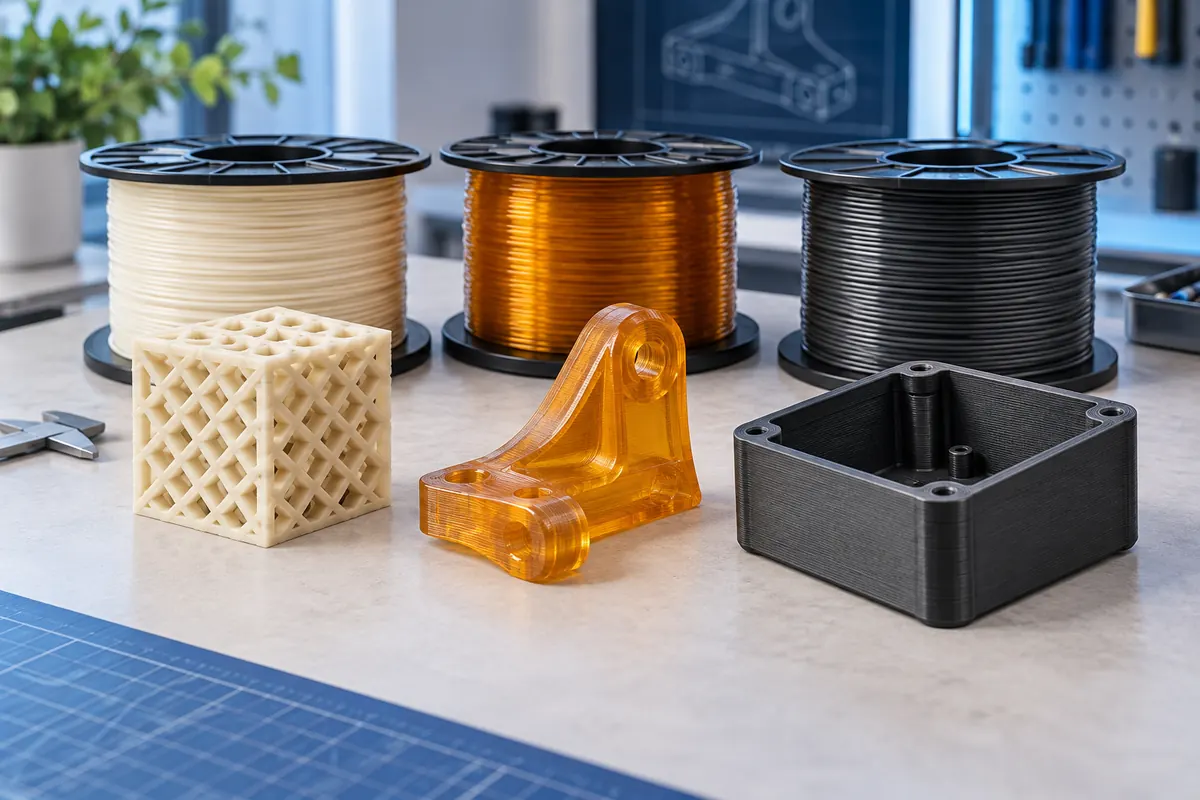
PLA vs PETG vs ABS
Choose material from the part's service requirements rather than from a universal ranking. Temperature, stiffness, impact, dimensional stability and processing conditions all matter.
Read guide →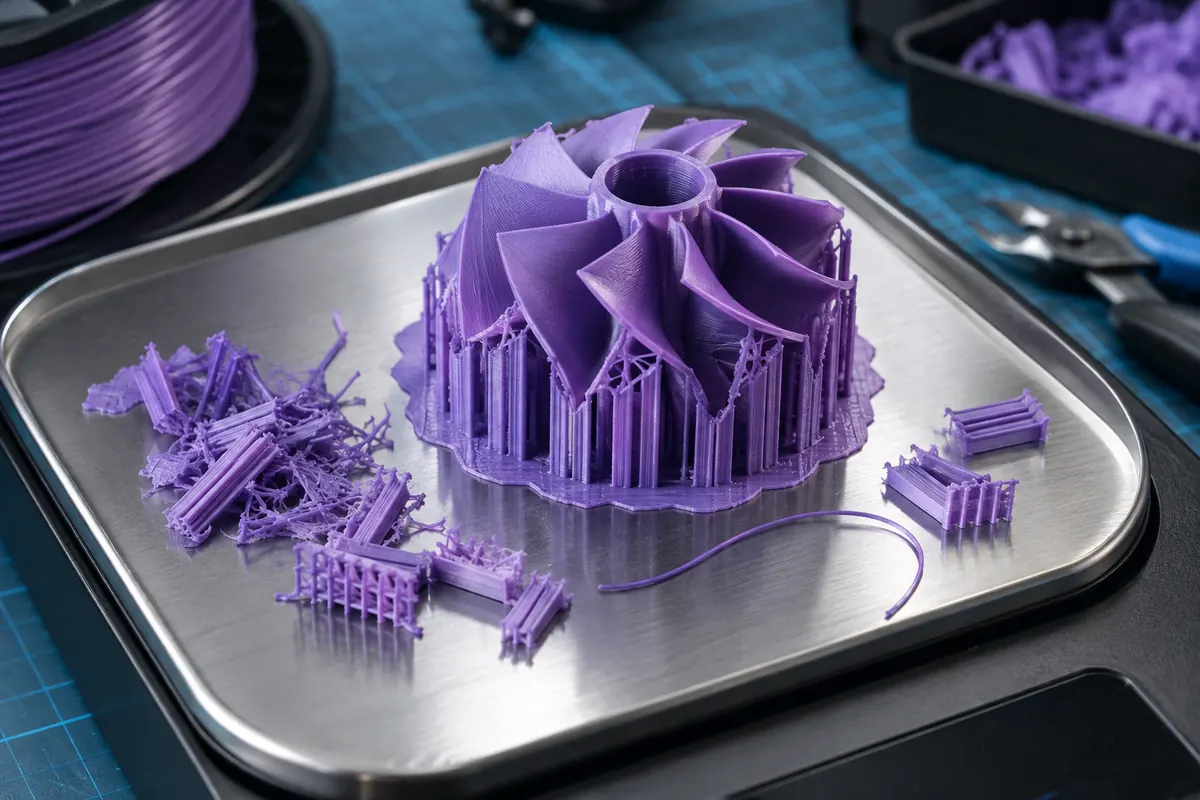 Filament & materials
How Much Filament Does a 3D Print Use?
Consumption is determined by sliced toolpaths. The object's outside volume alone cannot capture walls, sparse infill, support, brim and purge.
Read guide →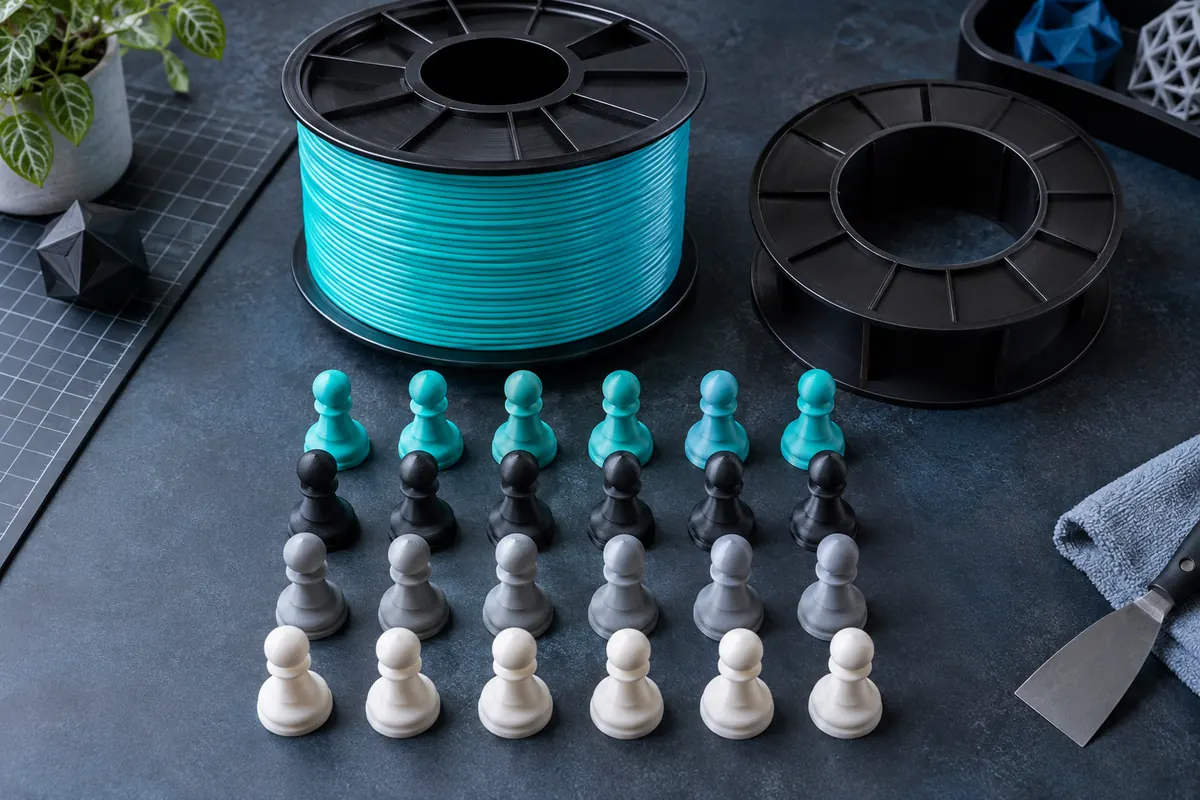 Filament & materials
How Long Does a 1kg Filament Spool Last?
One kilogram is a stock quantity, not a fixed number of printing hours. Tiny parts, large walls and multicolor purging spend it at very different rates.
Read guide →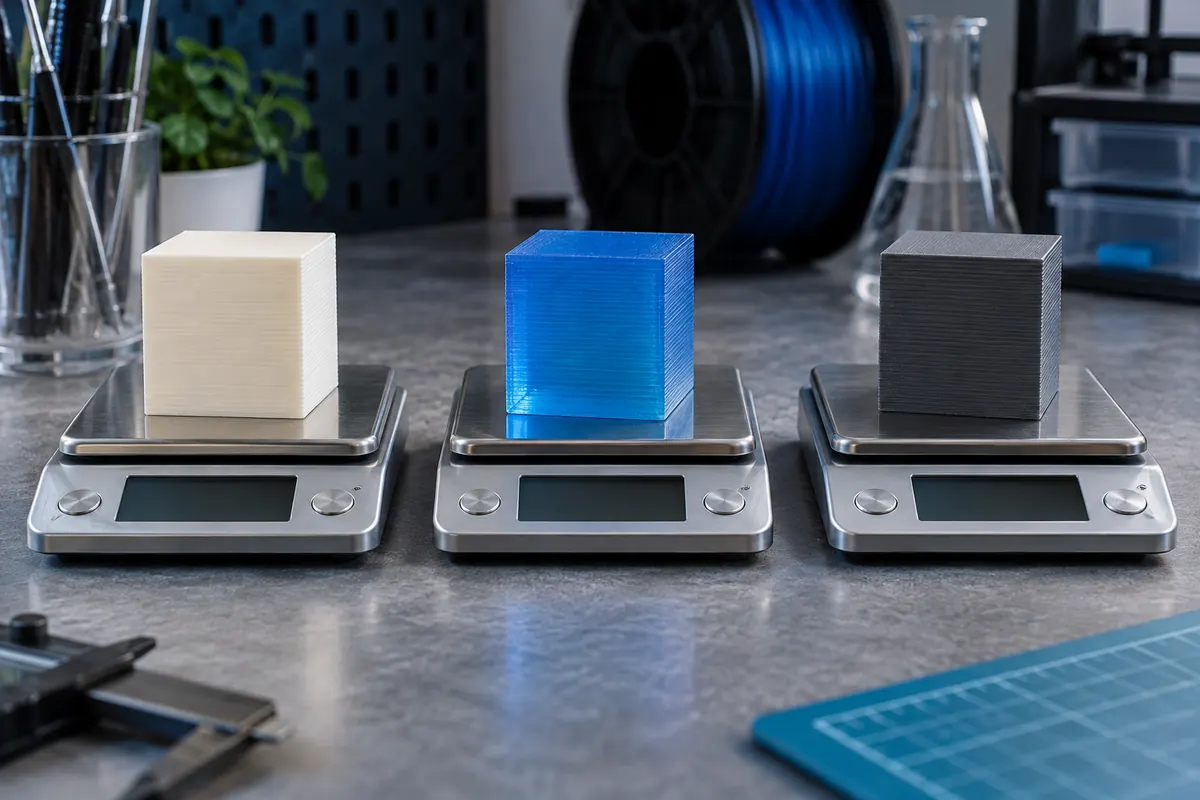 Filament & materials
Filament Density Explained
Density links solid material volume and mass. It is needed when a slicer or converter moves between meters, cubic centimeters and grams.
Read guide →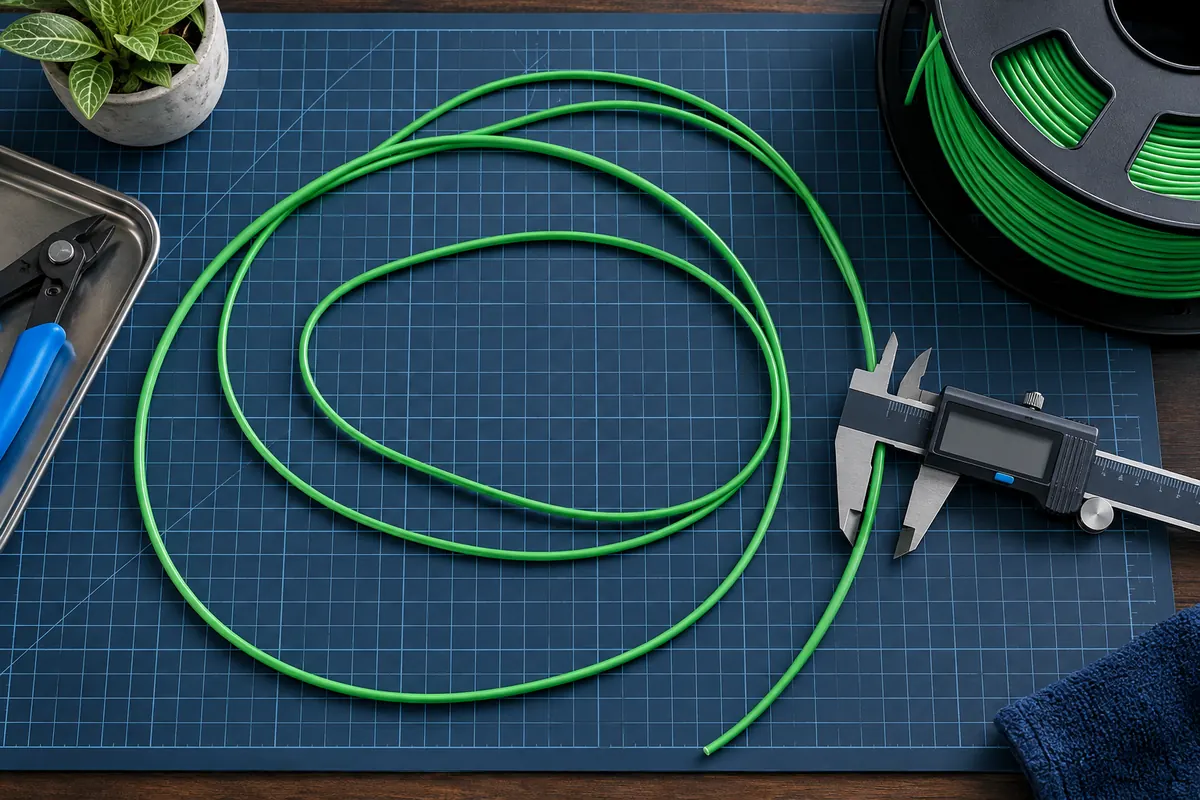 Filament & materials
How to Calculate Filament Length
A filament strand can be modeled as a cylinder. Its diameter determines area, and density converts that cylindrical volume into mass.
Read guide → Filament & materials
How to Reduce Filament Waste
Reduce avoidable waste by distinguishing failed parts, supports, startup extrusion and color purging. Each category requires a different intervention.
Read guide →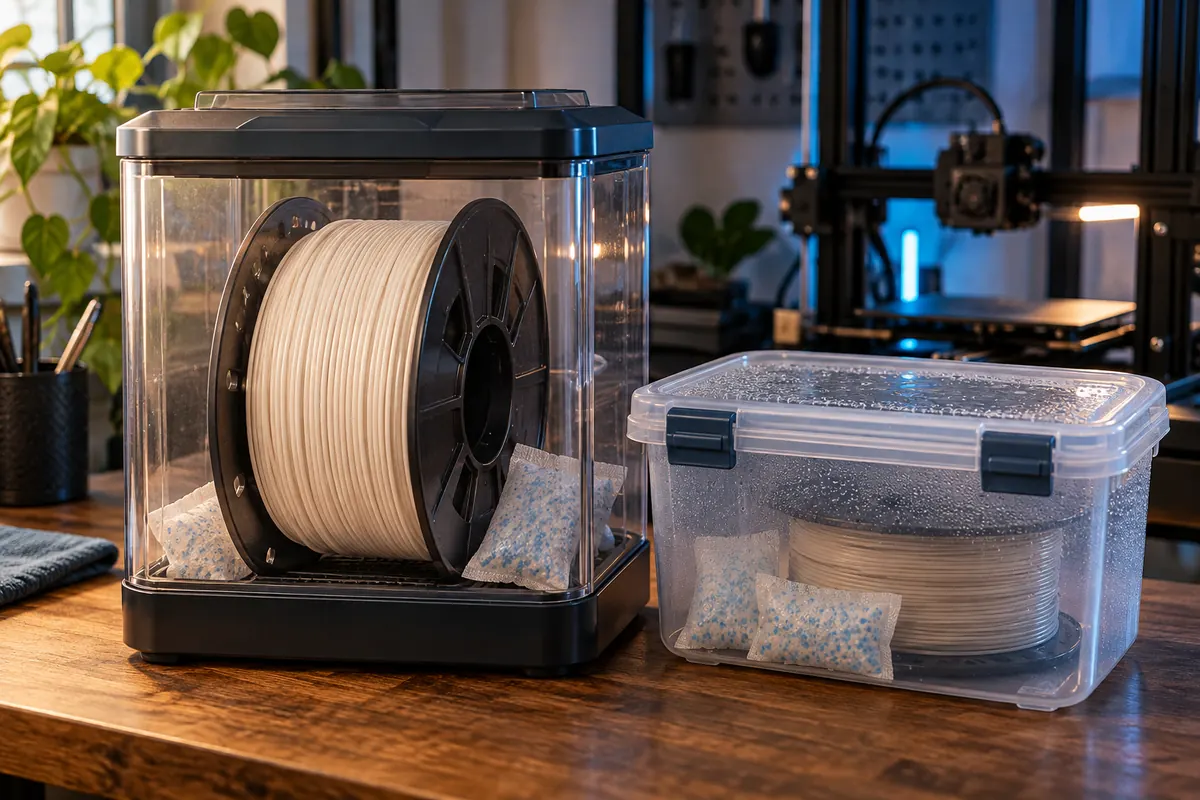 Filament & materials
How to Dry and Store 3D Printer Filament
Filament moisture sensitivity varies by product. Storage reduces future uptake, while drying removes existing moisture under controlled conditions.
Read guide →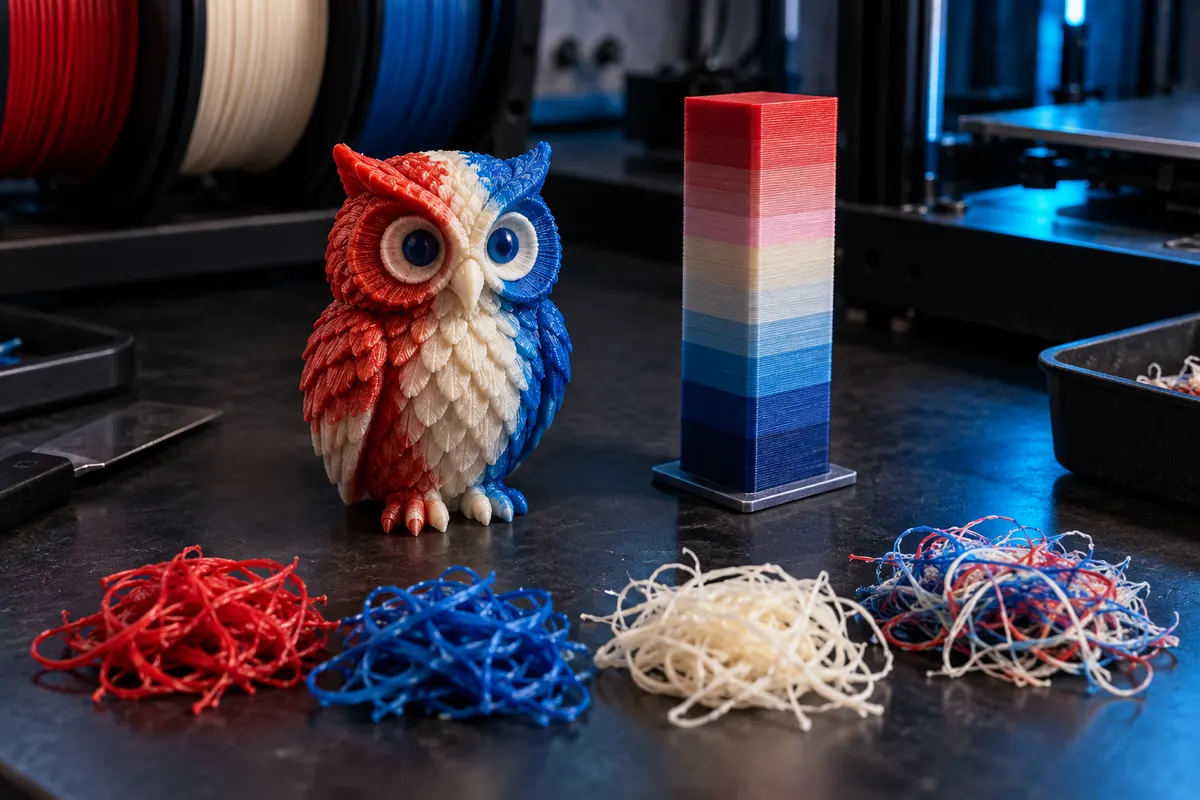 Filament & materials
How to Reduce Multicolor Filament Waste
Multicolor waste is driven by transitions, not merely the number of colors. Many changes on every layer can dominate a small decorative object's mass.
Read guide →No matching guides.